


Impact Principles Luncheon at Japan IDFI 5th Anniversary Conference
Theme: Japan’s Impact Moment – Strengthening Impact Practice and Outcomes in Japan and Globally
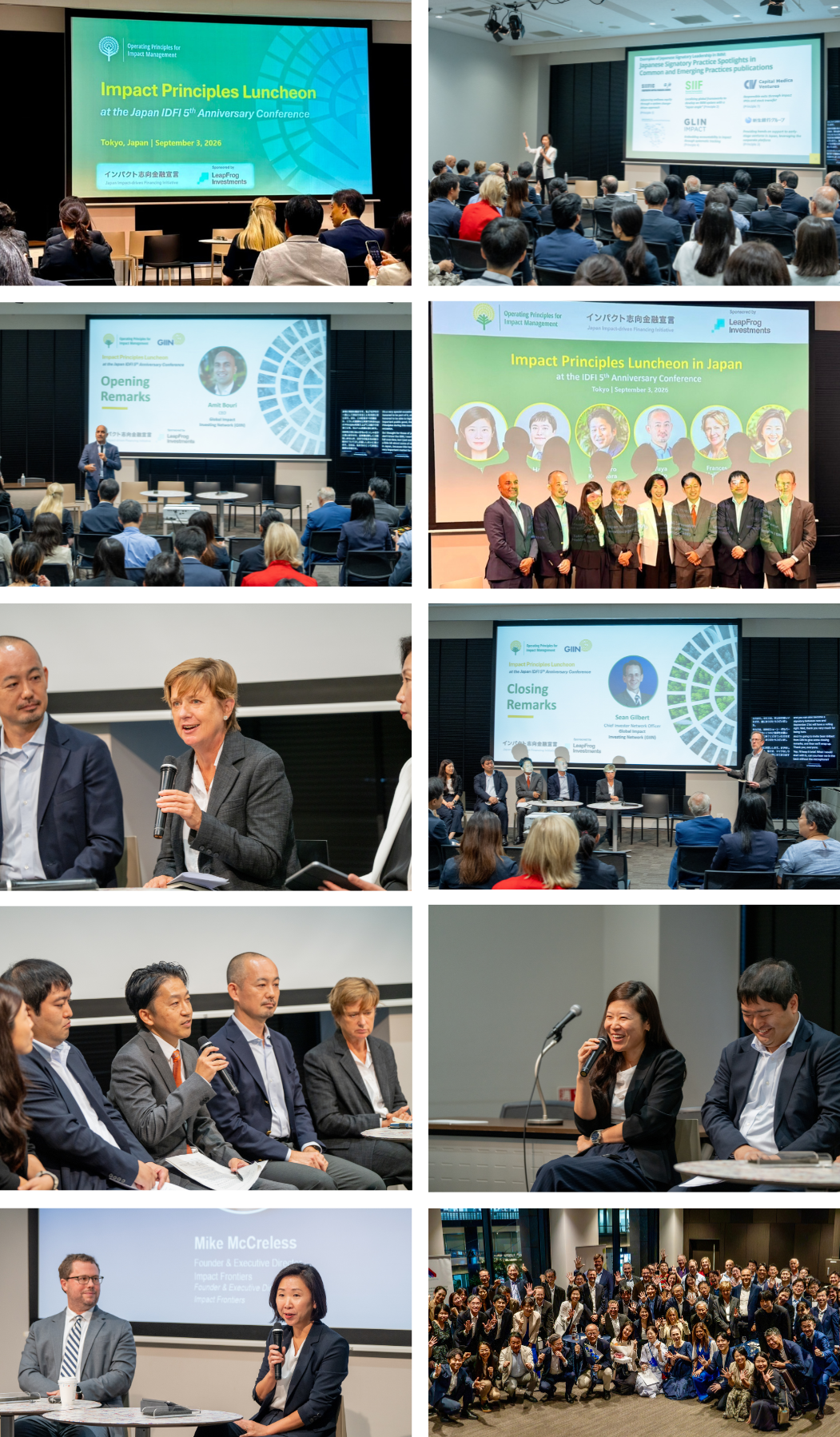
On September 3, we hosted an Impact Principles Luncheon in Tokyo as part of the Japan IDFI 5th Anniversary Conference, convening over 100 Japanese and global Signatories and guests to consider the role of the Impact Principles in Japan’s growing impact market.
With Japanese and global asset owner and manager perspectives from Temasek, Tokio Marine Holdings, Inc., Japan International Cooperation Agency (JICA), LeapFrog Investments, and Japan Social Innovation and Investment Foundation (SIIF), the candid practitioner-led panel discussion focused on how rigorous impact practice can help the Japanese market translate increased capital into greater outcomes, as well as the role of the Impact Principles in strengthening decisions, accountability, and market integrity.
A few key takeaways from the panel:
- Impact practice keeping pace with capital growth. As the volume of impact capital allocation in Japan grows, the application of impact practice to investment decisions, portfolio engagement, and exits is still developing. Panelists noted that the Impact Principles offer a meaningful signal of commitment to impact authenticity and rigor. More importantly, they provide a tool for continuous learning and improvement to drive better decisions. Panelists also noted the need for more practical case studies and benchmark data, as well as more training and capacity building at both the individual and organizational levels.
- The importance of asset owner leadership. Panelists noted that LP leverage is greatest before capital commitment and most valuable when exercised consistently across the investment lifecycle, pairing clear IMM expectations and accountability upfront with ongoing engagement and support for improvement. They also noted that LP expectations should be rigorous but proportionate, particularly for emerging managers, with staged roadmaps, reasonable reporting requests, and capacity-building support for IMM capabilities to enable improvement over time rather than overly restrictive gating. Both LPs and GPs emphasized the use of IMM as a tool for ongoing dialogue and improvement across the investment lifecycle, rather than a one-time diligence exercise or data-collection compliance need.
- The Impact Principles as a shared reference point. Panelists pointed to the Impact Principles as a useful and durable shared reference point for both internal impact integration and external credibility. The nine principles play an important role in maintaining and continuously improving impact integration across all phases of the investment process and across fund operations, with disclosures and independent verification helping to drive both transparency and ongoing adoption of IMM best practice.
- Japan’s collaborative model is a distinctive asset: In Japan, LPs and GPs are building the market as partners, with a focus on collaborative learning and improvement. For our panelists, the test for the Japanese market in five years will not be just how much capital is labeled as impact, but whether impact becomes a durable part of strategic allocation with repeatable commitments and decision-making to drive long-term outcomes. Japan can also shift from adopting global standards and being a learner to shaping them as an active contributor to global impact investing.
Head of Secretariat Joohee Rand also led a keynote session on IMM with Mike McCreless of Impact Frontiers, Impact Management: Where We Are and Where We’re Going. The session traced how the field built its shared infrastructure for IMM — from IRIS+ to the Five Dimensions to the Impact Principles — and where the most important frontiers now sit, including stronger asset owner and allocator leadership in IMM, as well as its integration into the highest levels of decision-making through governance and across the investment process. The discussions also highlighted Japan’s leadership in areas like systems change investing and the potential role that Japan can play in advancing impact management globally.
Thank you to the Japan IDFI Secretariat and our ecosystem partners for the invitation and engagement throughout the Conference. We look forward to continued collaboration to advance Japan’s and the global impact investing market and IMM practices together.